What AI changed about ad film production
Past the hype and the panic: where generative video helps, where it still falls apart, and how we use it in a cinema-grade pipeline while people keep the creative direction.
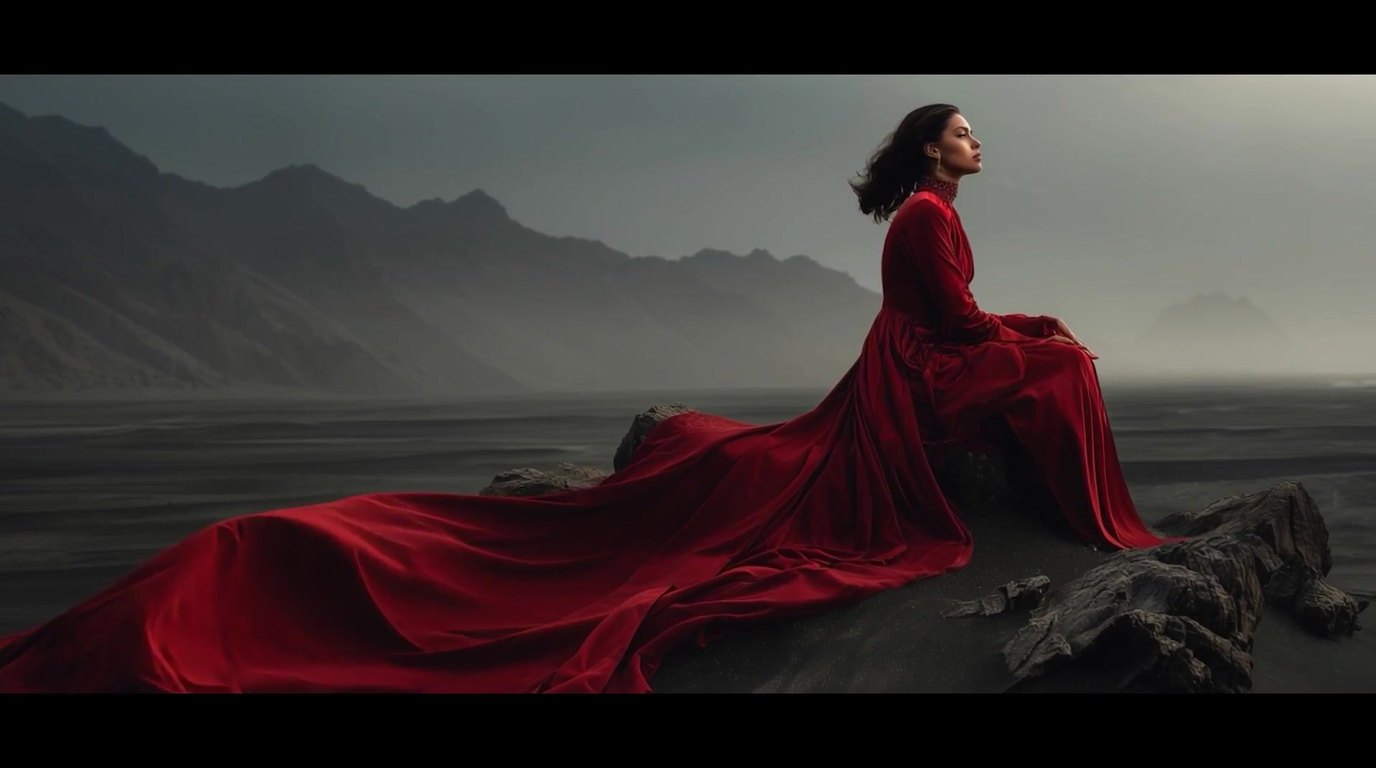
Two years ago, a client asking for "AI film" meant a novelty: a weird, melting demo you'd share in a group chat and never put a logo on. Today it's a line item. The tools have gone from party trick to production tool, so the question now is where does it earn its place?
The honest answer, after building AI ad films for real brands: it changed the front of the process far more than the end of it. Generative video collapsed the cost of trying things. It did not remove the need for anyone who knows what's worth trying.
The tools moved fast, and unevenly
The tools available in 2026 are capable. Google's Veo and the current generation of Runway can hold a shot together, and a couple of models now generate synchronised sound (dialogue, ambience, music) in the same pass instead of adding audio afterwards. Kling and its peers made it cheap to spin up dozens of variations for testing. Even the churn tells you how young this is: OpenAI announced it was winding down the consumer Sora apps in 2026, barely a year after the model reset everyone's expectations.
Translation for anyone commissioning work: don't marry a tool. The right model for a job this quarter may be deprecated next quarter. What lasts is the craft of directing them.
Where AI helps
We reach for generative video when the value is speed of exploration, not final frame quality:
- 01Concepting and pitching.A mood no longer has to live on a still board. You can show a moving version of an idea, with sound, before a single shoot day is booked.
- 02Pre-visualisation.Blocking a sequence, testing a camera move or checking whether a transition works now takes hours instead of days, with no crew on standby.
- 03Paid-social variants.Ten hooks for the same product, generated and tested, so the media spend backs the winner instead of a guess.
- 04The impossible or expensive shot.Abstract sequences, product-in-an-imagined-world, scenes that would blow a budget to film for real.
Generative video made ideas cheap to see. It did nothing to make the right idea cheap to have.
Thinking about an AI ad film?
Tell us the product, the audience and the deadline. We reply within one working day with a scoped quote.
Where it still falls apart
Put AI in charge of the finish and the cracks show. The recurring failures are boringly consistent: a face or a product that drifts between shots; hands and text that won't behave; physics that's almost right in a way that reads as uncanny; and the flatness that comes from a model averaging a million reference clips instead of making a choice. Brand-critical detail, meaning the exact pack, the exact logo lockup and the exact colour, is where the models are least reliable.
So the failure mode isn't "AI looks bad." It's "AI looks generic," and generic is the one thing a prestige brand cannot afford.



How we use it
Our rule is simple: technology is the framework, human curation is the authority. AI accelerates the parts of production that benefit from volume and iteration; direction, taste and brand judgment stay with people. In practice that means a hybrid pipeline. Generative tools handle exploration, previs and specific hero moments, and all of it is cut together with real cinematography, editing, grading and sound design. Hiding the seams is our job.
The teams getting burned are the ones treating AI as a replacement for the director. The teams pulling ahead use it as the fastest storyboard, motion test and variant machine ever built, and still bring a point of view to the final cut. The tools have improved enormously, but the standard for a finished film hasn't changed.
Thinking about an AI ad film?
Tell us the product, the audience and the deadline. We reply within one working day with a scoped quote.